
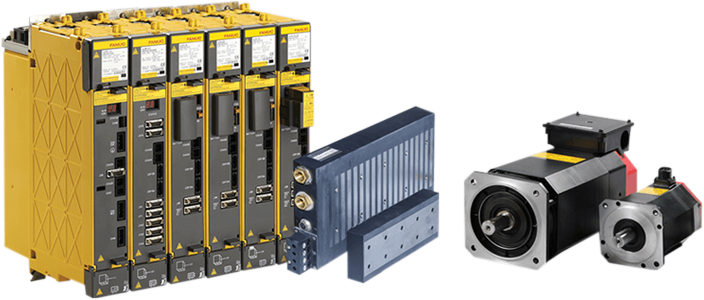
Galco retrofits obsolete CNCs
On machine tool mills, grinders, lathes and routers with FANUC FA America products. A complete retrofit upgrades both servo motors and drives, providing the best possible return in precision, speed, and efficiency.
Verification and Troubleshooting Tools
During identification, replacement planning, and commissioning, basic verification tools can help confirm electrical conditions and reduce rework. You may need a multimeter for standard electrical checks or an oscilloscope for signal troubleshooting when waveform behavior needs to be verified.
Contact us about FANUC motors and drives
Motors i Advantages
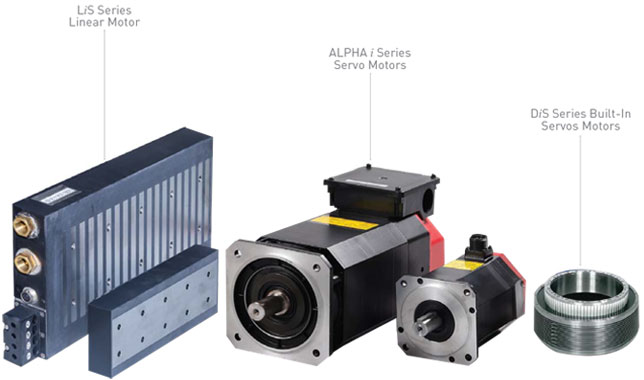
Galco offers the complete catalog of FANUC servo, spindle, linear and torque motors, suitable for a large range of applications. Options include the BETA i Series, ALPHA i Series, DiS Series, LiS Series, and BiI Series motors, each engineered to get the most out of your CNC application.

Beta i Series
Highly reliable 200V servo motors ideal for feed axes of entry level machines, positioning axis, and peripheral units. BETA i motors feature:
- Medium inertia with quick acceleration
- Available in two versions: F – ferrite magnet, S – strong motor (neodymium magnets)
- Torque output 0.2-40 Nm
- Smooth Rotation
- Up to 6,000 rpm
- High resolution βi Series encoder (1,000,000/rev)
- IP65 protection standard - optional IP67
Alpha i Series
Servo motors with excellent acceleration, primarily used in high-speed, high-precision machining in large industrial machines. ALPHA i motor features include:
- Smooth Feed
- Available in two versions: F – ferrite magnet, S – strong motor (neodymium magnets)
- Available with 200V or 400V input voltage
- Torque output from 1-3,000 Nm
- Up to 8,000 rpm
- High resolution αi Series encoder (32,000,000/rev)
- IP65 protection standard - optional IP67
LiS Series
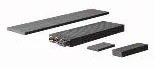
Linear motors delivering high gain and rigidity with excellent path accuracy. LiS motor features include:
- High rigidity allows higher speeds (4m/s) and higher acceleration (30G)
- Multi-head configuration for long stroke and high force
- Water cooling allows large continuous force (WC) 100-7,000 N
- High precision by applying linear scales with high resolution
- Maintenance-free mechanism
DiS Series
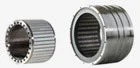
Synchronous, built-in torque servo motors ideal for rotary tables and rotary axes for 5-axis machines. DiS motor features include:
- Neodymium magnets provide high torque
- Available with 200V or 400V input voltage
- Maximum torque from 35-10,000Nm
- Continuous torque from 15-4,500Nm
- High-speed models up to 2,000 rpm
- Optimum magnetic circuit design provides low ripple
- Maintenance-free direct drive
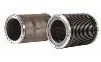
Bil Series
Asynchronous built-in spindle motors ideal for compact, high-speed, high-performance machines. BiI motor features include:
- High torque at low speeds
- High power at higher speeds
- Power range of 0.75 - 50kW
- Higher torque and higher power achieved through efficient heat radiation of stator resin mold (option) or copper-bar rotor
Amplifiers
For the best performance, Galco will pair your motor upgrade with FANUC’s latest drive technology. A FANUC CNC retrofit will include the ALPHA i Series or BETA i Series amplifier, each designed to deliver precision control to servo and spindle motors.
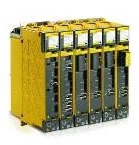
Alpha i Series
Energy efficient solution built using a modular structure. ALPHA i amplifier features include:
- Power source regeneration and low power loss
- αiPS (power supply), αiSP (spindle amplifier) and αiSV (servo amplifier) modules to deliver power and control motors
- Built-in leakage detection
- Safe Torque Off functionality
- Simple maintenance without disassembly
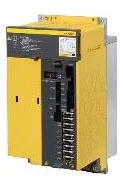
Beta i Series
Cost effective solution with an integrated power supply. BETA i amplifier features include:
- Factory fitted with a servo amplifier for up to two axes, or with a compact spindle plus servo amplifier for one spindle and up to three servo axes
- Low power lossSafe Torque Off functionality
- Simple maintenance without disassembly
- Suitable for auxiliary axes
- Several sizes to accommodate compact lathe machines
Frequently Asked Questions
What information is needed to identify a FANUC drive?
Use the drive model number and nameplate details, and confirm the system voltage and application context.
How do I confirm compatibility for a replacement drive?
Confirm ratings, form factor, interfaces, and application requirements match the existing system.
What related products support commissioning and troubleshooting?
Electrical verification tools such as multimeters and oscilloscopes can support commissioning and service checks.