
Photoelectric Sensors

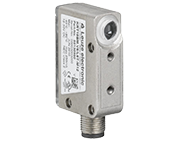
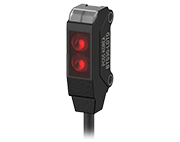
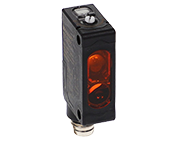
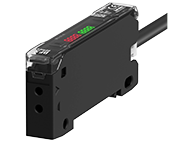
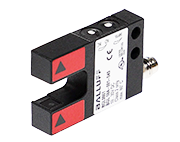
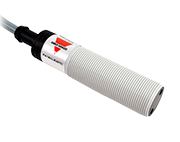
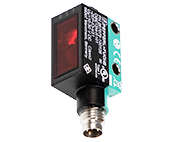
Industrial Photoelectric Sensors for Object Detection and Automation Feedback
Industrial photoelectric sensors use light to detect the presence, absence, or position of objects without physical contact. They are widely used in manufacturing, packaging, material handling, and assembly operations because they can detect a broad range of targets, including small parts, irregular shapes, and many non-metal materials. Photoelectric sensing is often the go-to choice when a mechanical limit switch is impractical, or when you need higher speed detection for counting, spacing, or jam detection on conveyors and production lines.
For correct selection, start with the sensing mode that best fits the target and the environment. Thru-beam sensing is often preferred for longer ranges and more robust detection in dusty areas, while retro-reflective is commonly used when you need a simpler installation with the emitter and receiver in one housing. Diffuse and convergent styles can work well when a reflector is not practical, but performance depends more heavily on target color, surface finish, and background conditions. If you are selecting for longer distances or more forgiving alignment, consider thru-beam options. For general-purpose applications with a reflector, retro-reflective sensors are a common starting point.
Correct usage depends on mounting and keeping optics stable over time. Align sensors carefully, secure mounting hardware to prevent vibration drift, and plan for lens cleaning where dust, film, or overspray can accumulate. Also consider how ambient light, shiny targets, and background reflectivity can cause inconsistent switching. In challenging detection tasks where the goal is to sense differences in color or print marks rather than simple presence, more specialized photoelectric categories may be appropriate, such as contrast sensing for registration marks and subtle contrast changes.
Frequently Asked Questions
What is the difference between thru-beam, retro-reflective, and diffuse photoelectric sensors?
Thru-beam sensors use separate emitter and receiver units, which typically provides the longest sensing distance and the most reliable detection in harsh environments. Retro-reflective sensors use one housing plus a reflector, which simplifies installation while still offering good range and stability. Diffuse sensors detect light reflected off the target itself, which can be convenient when a reflector cannot be mounted, but detection is more dependent on the target's color, texture, and angle. For longer range and highest reliability, review thru-beam. For reflector-based setups, see retro-reflective.
How do I choose the right photoelectric sensor for shiny objects or clear packaging?
Shiny or transparent targets can be challenging because they can reflect light unpredictably or allow light to pass through. In these cases, the sensing mode and optics matter more than raw range. You may need a different approach than a basic diffuse sensor, and retro-reflective sensors with appropriate optics and filtering are often used for certain packaging scenarios. Start by comparing modes such as retro-reflective and, when detection stability is critical, thru-beam where installation allows.
When should I use contrast or color photoelectric sensors instead of standard presence detection?
Use contrast or color photoelectric sensors when the goal is to detect a mark, label, registration line, or a specific printed feature, rather than simply detecting the presence of a product. These sensors are common in packaging and converting lines where timing and print alignment matter. If your application needs that level of discrimination, review contrast sensors for registration-style detection, and consider dedicated solutions when color-based identification is required.