
Human Machine Interface
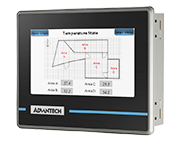
Human-Machine Interfaces for Industrial Automation
Human-machine interfaces (HMIs) are operator devices that provide a graphical window into machines, lines, and processes. They display real-time information from controllers and drives and let operators adjust setpoints, start and stop equipment, acknowledge alarms, and review diagnostic messages from a central screen.
In an automation and control system, an HMI communicates with programmable logic controllers (PLCs), process controllers and other intelligent devices over industrial networks to read data and send commands. Modern HMIs use touchscreen displays and intuitive screens so operators can quickly see production status, drill into faults, and make changes without accessing the control panel wiring.
Galco offers human-machine interface products for applications ranging from compact machine panels to large process systems. Panel-mount HMIs and industrial operator panels are widely used in industries such as oil and gas, water and wastewater, food and beverage, material handling, and general manufacturing, where clear on-screen information and easy interaction support uptime and productivity.
Frequently Asked Questions
Are touchscreen HMIs better than traditional panel buttons and lights?
Touchscreen HMIs offer greater flexibility: customizable screens, dynamic data display, alarm lists, trend logging, historical data, and easier navigation for complex systems. However, for simple systems or harsh environments (dust, moisture, vibration), a robust panel with buttons and indicators may be more reliable. Selection should be based on the operating conditions and required functionality.
How do I know what HMI specification I need?
Start by defining system requirements: number and type of input/output signals, data to be displayed, control actions, environmental conditions, communication protocols, and possibility of future expansion. Based on these, select display type, I/O compatibility, environmental protection, and communication support that match your application.
Can HMIs log data or interface with higher-level systems?
Yes. Many HMIs support data logging, recipe management, alarm/event history, and communication with SCADA or MES systems. This allows central monitoring, reporting, remote supervision, and integration in data-driven operational workflows.