
Overload Relays
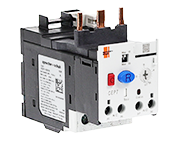
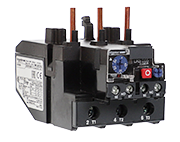
Overload Relays for Overcurrent Protection
Overload relays protect motors from damage caused by sustained overcurrent conditions such as overload, jammed loads, or phase loss. Installed with contactors in motor starter assemblies, they monitor motor current and trip when the overload exceeds the setpoint for a defined time, opening the contactor coil circuit and disconnecting the motor from the supply.
Unlike circuit breakers and fuses, which react almost instantaneously to short circuits, overload relays respond to overcurrent over time so motors can handle normal inrush without nuisance tripping. Thermal overload relays use bimetallic elements that bend as they heat, while electronic overload relays use sensors and electronics to provide adjustable current ranges, phase-loss protection and, in many cases, selectable trip classes. Common trip classes, such as Class 10, 20, and 30, define how quickly the relay responds to an overload.
Galco offers a wide range of overload relays for use with motor starters and contactors, including thermal and electronic designs, so maintenance and design teams can match motor full-load current, trip class, and mounting style to each application.
Frequently Asked Questions
What happens if an overload relay is not properly set to the motor's full load current?
If the relay is set below the motor's full load current, the motor may trip under normal operating conditions or during start-up. If set too high, the relay may fail to protect the motor during genuine overloads, potentially leading to overheating, winding damage, or fire hazard. Proper calibration to the motor's rated current is essential for reliable protection.
Is an electronic overload relay always better than a thermal one?
Not always. Electronic overload relays offer higher precision, adjustable settings, phase-failure detection, and advanced features, which are beneficial for variable loads, frequent starts, or critical applications. However, for stable motors with predictable loads, a thermal overload relay may be sufficient and more cost-effective, provided it is properly configured and combined with other protection devices.
What is the difference between an overload relay and a circuit breaker?
An overload relay protects an electric motor from prolonged overcurrent or overload conditions by monitoring motor current over time. A circuit breaker is designed to protect a circuit against instantaneous high-fault currents (short circuits). Overload relays handle thermal overloads and motor protection, while breakers handle short circuits. Both are usually needed together for full motor protection.