
Fuseblocks & Holders
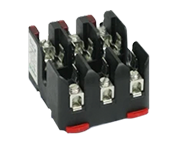
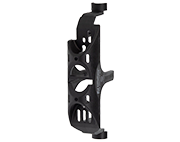
Fuse Blocks and Holders for Safe Fuse Installation and Circuit Protection
Fuse blocks and fuse holders provide a secure, accessible, and standardized way to install fuses in electrical systems. While fuses perform the actual overcurrent protection, fuse blocks and holders ensure proper electrical contact, mechanical stability, and safe replacement during maintenance.
In industrial and commercial environments, these components support organized wiring, reduce the risk of accidental contact with live parts, and help technicians quickly identify and replace blown fuses. Properly selected fuse mounting hardware also improves system reliability and simplifies compliance with electrical safety standards.
Types of Fuse Blocks and Fuse Holders
Fuse mounting hardware is available in multiple configurations to suit different applications:
- Panel-mount fuse holders are used in control panels and enclosures for easy access and replacement.
- DIN rail fuse blocks designed for modular control cabinets and standardized rail systems.
- Open fuse blocks that mount directly to panels or backplates, commonly used in power distribution.
- Finger-safe fuse holders that reduce exposure to live terminals during fuse replacement.
- Multi-pole fuse blocks for three-phase or multi-circuit applications.
- Inline fuse holders are used in compact or field-installed wiring assemblies.
Each type supports specific fuse sizes and current ratings, helping ensure proper fit, safe operation, and reliable protection.
Key Selection Criteria for Fuse Blocks and Holders
When selecting fuse blocks or holders, several technical factors should be evaluated:
- Fuse size and type compatibility, such as Class CC, Class J, Class RK, midget, or cartridge fuses.
- Voltage and current rating appropriate for the protected circuit.
- Mounting method, including panel mount, DIN rail, or inline installation.
- Number of poles, especially for three-phase or multi-line circuits.
- Touch-safe or finger-safe design to improve operator safety.
- Environmental considerations, such as temperature, vibration, or enclosure protection.
- Ease of maintenance, including labeling, accessibility, and fuse replacement speed.
Matching these characteristics to the application helps maintain safe operation and reduces downtime during servicing.
Frequently Asked Questions
What is the difference between a fuse holder and a fuse block?
A fuse holder typically supports a single fuse and is often used in panel-mounted or inline applications. A fuse block can hold multiple fuses and is commonly used for organized power distribution or multi-circuit protection within control panels.
Can fuse blocks be used for three-phase systems?
Yes. Multi-pole fuse blocks are designed specifically for three-phase or multi-line circuits. Ensure the block is rated for the system voltage and current and supports the correct fuse class for coordinated protection.
Are fuse holders reusable after a fuse blows?
Yes. Fuse holders and blocks are designed to be reused after a fuse operates, provided the holder has not been damaged by excessive heat, arcing, or improper installation. Always inspect contacts and terminals before installing a replacement fuse.