
Terminal Blocks
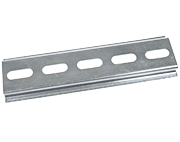
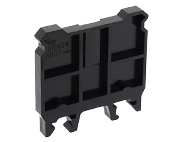
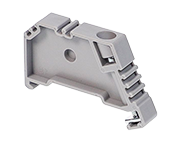
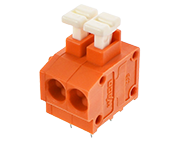
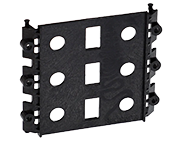
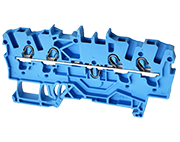
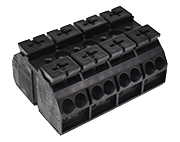
Terminal blocks (also known as connection terminals or screw terminals) are modular, insulated sections that fasten two or more wires together and consist of an insulating frame and a clamping component.
Today's control wiring solutions are becoming more complex as equipment is constrained to smaller spaces, and industry calls for more responsiveness and higher amounts of automation. Within the control board, terminal blocks provide that flexibility. These modular components are snapped firmly into place on a mounting rail to quickly and securely establish connections.
Terminal blocks can be easily added or removed from a mounting rail without interfering with other wire terminations. In addition to minimizing the complexity of control wiring, the plastic frames of terminal blocks also protect against shorts and thereby increase safety for installers and service crews.
Selection Criteria for Industrial Terminal Blocks
When choosing terminal blocks for industrial applications, several key factors should be considered:
- Conductor compatibility and wire size range, ensuring the block accepts the gauge of wire used.
- Connection method, such as a screw clamp for traditional secure terminations or a spring clamp for faster assembly.
- Current and voltage ratings, which must meet or exceed the expected load and system voltage.
- Insulation and barrier requirements, especially in environments where electrical isolation is critical.
- Panel mounting style, including DIN rail compatibility and space constraints.
- Environmental conditions, such as temperature, vibration, and exposure to contaminants, may affect material choice.
Selecting terminal blocks that align with these needs improves connection reliability, enhances serviceability, and reduces downtime in industrial panels and equipment.
Frequently Asked Questions
What factors determine the current rating of a terminal block?
Current rating is based on conductor cross-section, contact material, and thermal performance. Choose a terminal block rated to exceed the maximum expected current to ensure safety and prevent overheating.
Are terminal blocks suitable for high vibration environments?
Yes, but the connection method matters. Spring clamp and push-in terminal blocks often provide better vibration resistance than screw clamp designs because they maintain constant clamping force over time.
What wire preparation is required for terminal block installation?
Wire stripping length, conductor type, and ferrule use depend on the terminal design. Ferrules are often recommended for stranded conductors to ensure full conductor capture and consistent termination quality.