
Wire Basket Trays
Wire Basket Trays
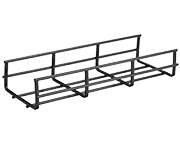
Wire basket trays are a type of wire mesh cable tray used to organize, route, and support electrical and data cables in industrial, commercial, and infrastructure environments. Constructed from intersecting steel wires that form an open, basket-like structure, these trays provide a lightweight, flexible cable management solution that allows easy access to cables during installation and maintenance.
Unlike solid or ladder cable tray systems, wire basket trays are designed to support lighter cable loads while maximizing airflow around cabling to help dissipate heat and reduce insulation stress. Their mesh design also simplifies cutting and field modification, making them ideal for complex routing paths.
Common Applications for Wire Mesh Cable Trays
Wire basket cable trays are used in a variety of industrial and commercial settings, including:
- Control panel wire routing where many smaller cables require organized pathways
- Telecommunications and data center cable distribution
- Routing signal and low-voltage cables in factory automation systems
- Complex cable layouts in machinery, equipment rooms, and infrastructure hubs
- Overhead, wall, or ceiling mounting where flexibility and access are required
Their mesh structure allows cables to be added or re-routed easily, reducing labor time during installation and maintenance.
Frequently Asked Questions
Where are wire basket trays typically used?
Wire basket trays are commonly used in industrial control panels, datacom rooms, offices and infrastructure environments where flexible, accessible cable routing is needed and heavier load capacity is not required.
How do I determine the right size of wire basket tray?
Size selection is based on the number of cables, cable diameters, and routing path complexity. Adequate space prevents crowding, improves airflow, and accommodates potential future cable additions.
Are wire basket trays suitable for heavy power cables?
Wire basket trays are better suited for light to medium-weight cables, such as signal, control, and data cables. For heavier power cabling, different cable tray types or support systems may be more appropriate.
How should wire basket trays be supported and mounted?
Trays should be supported with brackets, hangers or strut channel hardware at recommended intervals to maintain stability and prevent sagging under load.
How do wire basket trays improve airflow?
The open mesh structure allows air to circulate freely around cables, which helps dissipate heat and supports temperature management in high-density cable runs.