
Wire & Cable


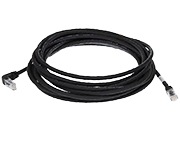
Wires and cables are used to bear electrical loads and communication signals. Using the proper gauges, lengths, and types is an important consideration in power distribution and industrial networking.
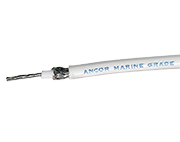
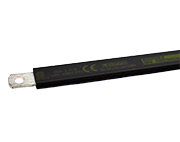
Different types of cables serve different purposes. Battery cable is used to power an electrical system, and requires the proper gauge, length, and amperage specifications to prevent excessive heat building in the cable. Coaxial cable consists of an inner conductor surrounded by an insulating layer and a conducting shield. Coaxial cables function best as transmission lines. Busbars are metallic strips or bars used for local power distribution. They are commonly installed inside switchgear and panelboards.
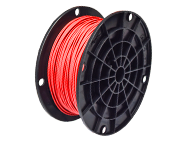
Other options include single-conductor cables (a single, insulated wire), multi-conductor cables (several independent wires bundled together), and heating cable. An assortment of colors is available to help simplify cable management.
Key Selection Factors for Industrial Wiring Cable
Choosing industrial wire and cable depends on electrical ratings, installation conditions, and the type of circuit being served. Power, control, and signal wiring often require different insulation, shielding, and conductor sizing to ensure safe and reliable performance in industrial environments.
Key selection factors include:
- Voltage rating appropriate for the system supply and control circuits
- Conductor size (gauge) to support current capacity and prevent overheating
- Insulation material suited for temperature and environmental exposure
- Shielding needs when signal integrity and noise reduction are required
- Flexibility requirements in applications with motion or vibration
- Cable jacket durability for abrasion, oil, and moisture resistance
- Number of conductors based on single conductor wire or multi conductor cable designs
- Compliance ratings such as UL or CSA for industrial wiring installations
Selecting cable that matches these requirements supports long-term durability, cleaner termination, and compatibility with connectors and terminals used in industrial wiring systems.
Frequently Asked Questions
What is the difference between single-conductor and multiple-conductor cable?
Single-conductor cable consists of one insulated wire used for internal panel wiring or connecting to terminals. Multiple-conductor cable bundles several insulated wires together for organized routing and easier termination in control systems.
Why is shielded cable important for signal wiring?
Shielded cable includes a conductive barrier around the conductors to reduce electromagnetic interference (EMI) and maintain signal integrity in control and data circuits.
How does flexibility affect cable selection?
Flexible cable constructions use finer stranding and more pliable jacket materials to withstand movement, bending, or vibration without fatigue, making them suitable for machine wiring or movable connections.