
Capacitors
Capacitors: Types, Capacitance, and Common Applications
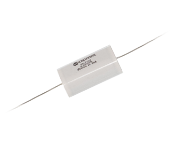
Capacitors are electronic components that store and release energy, commonly used for filtering, timing, motor circuits, and power electronics. The key spec is capacitance (measured in farads, often shown as μF), which affects how much energy the capacitor can store and how it behaves in a circuit. In most selections, you also need to match the voltage rating to the application and environment.
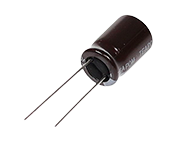
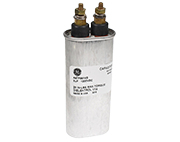
If you need broad, everyday options for decoupling, filtering, or basic energy storage, start with general purpose capacitors. When the job calls for higher capacitance values for bulk filtering and smoothing, common in power supply sections-electrolytic capacitors are often used, but they're more sensitive to heat and ripple current, so rating checks matter for service life.
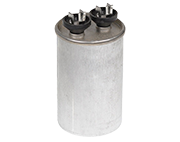
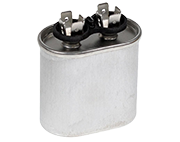
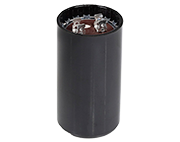
Many capacitor searches are really about matching the use case. In motor applications, motor start capacitors support startup torque for single-phase motors, while motor run capacitors are built for continuous operation once the motor is running. In lighting systems, lighting capacitors are commonly used in circuits where electrical characteristics of the load need to be stabilized.
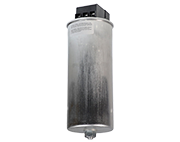
For SCR-controlled power circuits, capacitor type matters because the capacitor may be doing "protection" or "switching support," not just storage. SCR snubber capacitors help reduce voltage spikes and dv/dt stress that can damage devices or cause false triggering. SCR commutation capacitors are used in designs that need the capacitor to help move current during switching so the SCR can turn off properly in the intended control scheme.
- General purpose capacitors for filtering, decoupling, and timing
- Electrolytic capacitors for bulk storage and smoothing
- Motor start capacitors for startup torque
- Motor run capacitors for continuous motor operation
- Lighting capacitors for lighting-related circuits
- SCR snubber capacitors for transient protection
- SCR commutation capacitors for SCR switching support
Frequently Asked Questions
What does capacitance (μF) change in a circuit?
Capacitance affects how much energy the capacitor can store and how quickly it charges and discharges. Higher μF values are often used for stronger smoothing and buffering, while lower values are common for decoupling and timing functions. For broad uses, browse general purpose capacitors, or for bulk filtering and smoothing, electrolytic capacitors are commonly used.
How do I choose the correct voltage rating?
Select a voltage rating that meets or exceeds the circuit's operating voltage, including expected surges. Underrating voltage is a common cause of premature failure, whether you're choosing electrolytic capacitors for power sections or motor run capacitors for continuous duty.
What's the difference between motor start and motor run capacitors?
Motor start capacitors are typically used briefly during startup to help deliver higher starting torque. Motor run capacitors are designed for continuous operation after startup. Choosing the wrong type can lead to overheating, poor performance, or shortened lifespan.
When would I use an SCR snubber capacitor?
Use SCR snubber capacitors in switching circuits where voltage spikes and rapid dv/dt can stress devices or cause false triggering. They're commonly used to improve reliability in industrial power switching and controlled-load applications.
What are SCR commutation capacitors used for?
SCR commutation capacitors are used in SCR-controlled designs where the capacitor helps shift current during switching so the SCR can turn off as intended. If the circuit is SCR-based and requires commutation support, commutation-specific capacitors are typically more appropriate than general-purpose selections.