
Vortex Tubes
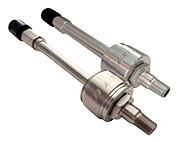
Vortex Tubes for Spot Cooling and Enclosure Thermal Control
A vortex tube is a compressed air device that separates a single air stream into hot and cold outlets without the use of moving parts. This simple, solid-state design makes vortex tubes a reliable and low-maintenance solution for industrial cooling applications where electricity or refrigerant-based systems are impractical.
Because compressed air is already widely available in manufacturing and industrial facilities, vortex tubes are often used for localized or spot cooling on equipment and enclosures. They are commonly applied to cutting machinery such as lathes and mills, where the cold air stream both cools critical components and helps remove chips, dust, and debris during operation.
Vortex tubes are also used in enclosure thermal management applications to reduce internal temperatures without introducing external contaminants. In these cases, they may be integrated alongside other thermal management solutions such as air conditioners, heat exchangers or fans, depending on the heat load and environmental requirements.
With compressed air pressures around 100 PSI and adjustable control valves at the hot end, vortex tubes can deliver a wide range of temperature outputs, from extremely cold air suitable for rapid cooling to hot air streams useful for drying or warming applications. Their durability, simplicity, and fast response make them well-suited for harsh industrial environments.
Frequently Asked Questions
Are vortex tubes suitable for continuous operation?
Vortex tubes can operate continuously as long as a compressed air supply is maintained. However, air consumption should be evaluated to ensure long-term operating costs and compressor capacity align with system demands.
Do vortex tubes require regular maintenance?
Vortex tubes require minimal maintenance because they contain no moving parts. Ensuring a clean, dry compressed air supply helps maintain consistent performance and prolong service life.
Can vortex tubes be used in dirty or hazardous environments?
Yes, vortex tubes perform well in environments with dust, oil mist, or vibration because they contain no moving parts or electrical circuits. This makes them suitable for industrial settings where traditional cooling devices may fail prematurely.