
Ballasts
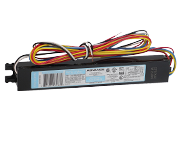
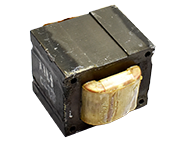
Ballasts for Fluorescent and HID Industrial Lighting Systems
Ballasts are electrical devices used to regulate and limit the amount of current flowing through lighting circuits. They are most commonly used with fluorescent and high-intensity discharge (HID) lamps, which require controlled current to operate safely and efficiently. Without a ballast, these lamps can draw excessive current, potentially causing overheating, lamp damage, or premature failure.
Fluorescent lamps exhibit negative differential resistance, meaning that once the lamp is started, the electrical resistance decreases as current increases. Because of this characteristic, a ballast is required to stabilize the electrical flow and maintain safe operating conditions. Traditional ballasts used for this purpose are inductive devices that store energy in a magnetic field and regulate the current delivered to the lamp.
Ballasts may also incorporate resistive or capacitive elements depending on the lamp type and circuit design. In many industrial and commercial lighting systems, ballasts are used to start lamps, regulate current, and ensure consistent light output throughout the lamp's operating life.
Modern lighting systems commonly use electronic ballasts that rely on solid-state circuitry to control lamp operation. Electronic ballasts are typically smaller, lighter, and more energy efficient than traditional magnetic ballasts. They also support advanced lighting capabilities such as dimming, improved power factor, and high-frequency operation that reduces flicker and improves lighting performance.
Ballasts are widely used in commercial buildings, warehouses, manufacturing facilities, and other industrial environments where fluorescent or HID lighting systems are installed. Selecting the appropriate ballast helps ensure proper lamp performance, energy efficiency, and long-term reliability of the lighting system.
Frequently Asked Questions
How do I choose the right ballast for a lighting system?
Selecting the correct ballast depends on the lamp type, wattage, voltage requirements, and desired lighting features such as dimming capability or energy efficiency. Matching the ballast specifications with the lamp ensures proper performance and longer service life.
What is the difference between magnetic and electronic ballasts?
Magnetic ballasts use coils and magnetic fields to regulate current, while electronic ballasts use solid-state circuitry to control lamp operation. Electronic ballasts are typically smaller, more energy efficient, and capable of supporting features such as dimming and high-frequency operation.