
Pilot Lights
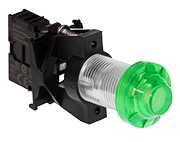
Industrial Pilot Lights and Panel Indicator Lights
Pilot lights are visual indicator devices used in electrical enclosures, industrial control systems, and machinery to display system status or operating conditions. These indicators provide immediate visual feedback to operators by illuminating when power is present, a machine is running, or a specific condition has been triggered within a control circuit.
Most modern pilot lights use LED technology due to its long service life, low power consumption, and resistance to vibration and mechanical stress. LED pilot lights also provide consistent brightness and fast response times, making them well-suited for industrial control environments. Older pilot light designs may use incandescent lamps, but these are increasingly being replaced by more efficient LED-based indicators.
Pilot lights are commonly installed in control panels, operator stations, and electrical enclosures where a clear visual status indication is required. Available in a wide range of lens colors, including red, green, amber, blue, and white, they help convey different operating conditions such as power on, system ready, warning conditions, and fault states. Standardized color coding helps operators quickly interpret equipment status and respond appropriately.
Industrial pilot lights are available in multiple mounting sizes and configurations to match panel cutout requirements. Common panel mounting diameters include 16 mm, 22 mm, and 30 mm designs used in industrial control equipment. In addition to lens color, other configurable features may include voltage rating, terminal connection type, lens style, and push-to-test functionality for verifying proper operation.
Many pilot lights are also designed with environmental protection features to ensure reliable operation in demanding industrial environments. Sealed housings and protective lenses help protect internal components from dust, moisture, vibration, and other environmental conditions that may be present in manufacturing facilities, processing plants, or outdoor installations.
By providing clear and reliable visual status indication, pilot lights play an important role in improving operator awareness, equipment monitoring, and overall industrial system safety.
Frequently Asked Questions
What current draw do LED pilot lights typically require?
LED pilot lights generally require very low operating current, often between 5 mA and 20 mA, depending on the design and voltage rating. This low current consumption makes LED pilot lights more energy efficient and suitable for long-term operation in control circuits.
What standards or certifications apply to pilot lights?
Industrial pilot lights may comply with safety and performance standards such as UL, CSA, CE, and IEC certifications. These standards ensure that the devices meet requirements for electrical safety, reliability, and environmental performance in industrial applications.