
Triac Controls
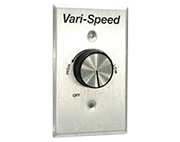
TRIAC Controls for AC Motor Speed Regulation and Solid-State Power Switching
A TRIAC, or triode for alternating current, is a three-terminal electronic switching device that can conduct current in both directions. Because TRIACs can conduct in both directions, they are widely used for switching alternating current and regulating the average power delivered to an electrical load. This capability allows TRIAC control components to adjustmotor speed, dim lighting systems, and regulate electric heating elements in a wide range of industrial and commercial applications.
TRIAC devices are similar to thyristors in that they function as solid-state switching components. However, TRIACs offer the added advantage of being triggered by both positive and negative gate signals, enabling full-wave AC power control without additional switching components or complex wiring. This simplifies control circuit design and enables compact, cost-effective power regulation solutions.
Bidirectional switching makes TRIAC controls well-suited for basic AC motor start/stop control and variable power applications. By using phase-angle control techniques, TRIAC devices can vary the portion of each AC waveform delivered to a load, effectively adjusting voltage and current levels. This makes them useful for simple motor speed control, fan regulation, conveyor operation, and HVAC system performance adjustment.
In industrial automation environments, TRIAC control modules are often integrated into control panels, machine interfaces, and building management systems where smooth power modulation and reliable switching are required. Because TRIAC controls operate without mechanical contacts, they offer long service life, reduced maintenance requirements, and consistent switching performance compared to electromechanical relays.
Proper TRIAC control selection depends on factors such as load type, current rating, voltage capacity, thermal dissipation requirements, and system control architecture. Correct sizing and installation help ensure stable operation, minimize electrical noise, and improve the efficiency and reliability of AC motor-driven equipment.
Frequently Asked Questions
Can TRIAC controls be used for high-power industrial motors?
They are generally used for low to moderate power applications; larger motors typically require variable frequency drives for precise speed and torque control.
Can TRIAC controls generate electrical harmonics?
Yes, phase-angle control can distort the AC waveform and introduce harmonics, which may require filtering in sensitive applications.
How is TRIAC overheating prevented?
Proper heat sinking, adequate airflow, and correct load sizing help prevent excessive temperature rise during operation.