
Media Converters
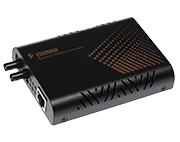
Media Converters for Industrial Ethernet and Fiber Network Integration
Media converters are networking devices that connect different types of communication media, most commonly converting Ethernet signals between copper and fiber optic cabling. They allow devices with different interfaces to communicate while extending network distance and improving signal reliability.
These devices are widely used to integrate copper-based systems with fiber networks, enabling longer transmission distances and reducing the impact of electrical interference in industrial environments. Media converters are commonly deployed in factory automation, building-to-building connections, and remote monitoring systems.
They are often used alongside Ethernet switches, gateways & routers, and ethernet extenders to support flexible network design and expansion.
Key Benefits of Media Converters
Media converters help improve network performance and flexibility by:
- Converting copper Ethernet signals to fiber and vice versa
- Extending communication distances beyond standard Ethernet limits
- Reducing electromagnetic interference in harsh environments
- Supporting high-speed data transmission across industrial networks
How to Choose a Media Converter
Selecting the right media converter depends on your network design and application requirements. Start by identifying the type of conversion needed, such as copper-to-fiber or fiber-to-fiber, and ensure compatibility with your existing equipment.
Key factors to consider include:
- Fiber type (single-mode for long distances, multi-mode for shorter runs)
- Data speed requirements (10/100 vs. Gigabit or higher)
- Transmission distance and connector type (SC, LC, etc.)
- Whether a managed or unmanaged device is needed for monitoring and control
- Environmental ratings for temperature, vibration, and electrical noise
Choosing a media converter that matches both performance and environmental requirements helps ensure reliable communication and long-term network stability.
Frequently Asked Questions
What is the difference between single-mode and multi-mode fiber in media converters?
Single-mode fiber supports longer transmission distances and is used for long-range communication, while multi-mode fiber is typically used for shorter distances with lower cost. The media converter must match the fiber type used in the network.
Do media converters increase network distance?
Yes, media converters enable the use of fiber optic cabling, which can transmit data over much longer distances than copper Ethernet cables, often extending networks to several kilometers.
When should I use a media converter instead of a switch?
A media converter is used when you need to convert between different media types, such as copper and fiber, while a switch is used to connect multiple devices within the same network. In many cases, both devices are used together.