
Current Transformers
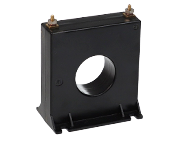
Current Transformers for Accurate Current Measurement and System Monitoring
Current transformers (CTs) are used to measure alternating current by stepping down high current levels to a lower, measurable value. This allows electrical systems to be monitored safely and accurately without exposing instruments or operators to high-current circuits. Current transformers are widely used in industrial power systems, energy management, and control applications where precise current measurement is required.
In practical applications, current transformers are commonly used with panel meters & gauges and monitoring equipment to provide real-time current readings. They are also used alongside devices such as shunts and other measurement components, depending on the system design and required level of accuracy. Typical use cases include power distribution panels, motor control centers, and energy monitoring systems, where tracking load conditions and system performance is critical.
Current transformers are available in various configurations, including split-core and solid-core designs, to support different installation requirements. Split-core CTs allow for installation without disconnecting existing wiring, making them ideal for retrofits, while solid-core designs are often used in new installations where maximum accuracy and stability are required.
When selecting a current transformer, key considerations include current ratio, accuracy class, burden rating, and operating environment. It is also important to ensure compatibility with the connected measurement or control equipment. Proper selection ensures accurate current measurement, improved system visibility, and reliable long-term performance in electrical monitoring applications.
Frequently Asked Questions
What is the current ratio in a current transformer?
The current ratio defines the relationship between the primary current and the secondary output current, such as 100:5 or 200:5. It determines how the measured current is scaled.
What is burden in a current transformer?
Burden refers to the load connected to the transformer's secondary winding, including meters and wiring. It affects measurement accuracy and must be within the current transformer's specified limits.
How do I install a current transformer correctly?
Proper installation includes correct orientation, secure mounting, and ensuring the secondary circuit is properly connected and never left open during operation.