
Linear Transducers
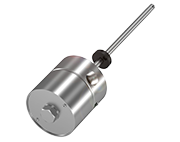
Linear Transducers for Position Feedback and Displacement Measurement
Linear transducers are used to measure linear displacement and convert mechanical movement into an electrical signal that can be interpreted by control systems, displays, or data acquisition equipment. They provide accurate position feedback in applications where distance, travel, stroke length, or object position must be monitored with precision.
In industrial automation and motion control systems, linear transducers are commonly used in robotics, CNC machinery, machine tooling, hydraulic and pneumatic cylinders, PCB assembly equipment, and inspection systems. By providing real-time position feedback, they help improve motion accuracy, repeatability, and process control. Linear transducers may also be used alongside other process and instrumentation devices such as transducers, panel meters and gauges, and force gauges when systems require broader measurement and monitoring capabilities.
When selecting a linear transducer, key considerations include measurement range, resolution, linearity, output signal, response speed, mounting style, and environmental conditions. The transducer must be matched to the required stroke length and control system input, whether the application uses analog voltage, current output, or digital feedback. For harsh industrial environments, factors such as vibration, temperature, moisture, and mechanical wear should also be evaluated to ensure reliable long-term performance.
Properly selected linear transducers provide accurate displacement measurement, stable feedback, and dependable integration into automation, positioning, and machine control systems.
Frequently Asked Questions
How do I choose the correct measurement range for a linear transducer?
The measurement range should cover the full travel distance of the application with some margin for overtravel. Selecting a range that is too short can cause damage or measurement loss, while a range that is too long may reduce usable resolution.
What is the difference between resolution and accuracy in a linear transducer?
Resolution refers to the smallest change in position the transducer can detect. Accuracy refers to how closely the measured value matches the true position. Both are important, but high resolution does not always mean high accuracy.
What causes inaccurate readings from a linear transducer?
Common causes include incorrect mounting, poor alignment, electrical noise, damaged cables, environmental contamination, mechanical wear, or incorrect signal scaling in the control system.