
Liquid Level Indicators
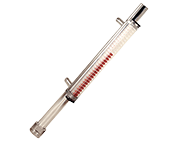
Liquid Level Indicators for Tank Monitoring and Fluid Level Visibility
Liquid level indicators are used to provide clear visual or electronic indication of fluid levels in tanks, reservoirs, vessels, and process systems. They help operators monitor inventory, verify process conditions, prevent overflow, and identify low-level conditions that could lead to pump damage or interrupted operation.
In industrial and commercial applications, liquid level indicators are commonly used in water treatment systems, chemical storage tanks, hydraulic reservoirs, boilers, cooling systems, and process vessels. Depending on the application, they may provide direct visual indication at the tank or transmit level information to a control system for remote monitoring. For broader level control applications, liquid level indicators may be used alongside liquid level controllers, sensors, panel meters and gauges, or other process and instrumentation devices.
When selecting a liquid level indicator, key considerations include tank size, fluid type, measurement range, mounting configuration, visibility requirements, and environmental conditions. Compatibility with the liquid is especially important when working with corrosive chemicals, high temperatures, pressurized vessels, or fluids with varying density or viscosity. Proper selection ensures accurate level visibility, reliable operation, and improved process safety.
For applications requiring local indication, simple mechanical or sight-style indicators may be sufficient. For systems requiring remote monitoring or automation, electronic level indicators with signal outputs may be better suited. Matching the indicator type to the process conditions and monitoring requirements helps maintain safe, efficient, and predictable fluid handling operations.
Frequently Asked Questions
Can liquid level indicators be used with corrosive liquids?
Yes, but the indicator must be made from materials compatible with the liquid. For corrosive applications, chemical-resistant housings, seals, floats, or wetted components may be required.
Where should a liquid level indicator be installed?
It should be installed where it can accurately represent the tank level and remain accessible for viewing or maintenance. Placement should avoid excessive turbulence, obstructions, or locations where buildup may interfere with measurement.
Do liquid level indicators need regular maintenance?
Yes, maintenance for liquid level indicators may include cleaning sight areas, checking seals and fittings, verifying float movement, inspecting for corrosion or leaks, and confirming that electronic outputs or alarms are functioning correctly.