
Navigation Sensors
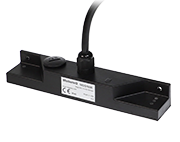
Navigation Sensors for AGVs, Mobile Robots, and Automated Guidance Systems
Navigation sensors are the eyes and ears of automated guided vehicles. They help guide robotic equipment through a facility, complete assigned movement tasks, and prevent the robot from causing harm to itself, nearby equipment, or personnel. In industrial and warehouse environments, navigation sensors are essential for accurate positioning, obstacle detection, route following, and safe automated movement.
The family of navigation sensors includes several technologies, such as 2D and 3D LiDAR, ultrasonic sensors, cameras, magnetic sensors, inductive sensors, and optical line sensors. These devices help robots detect objects, identify paths, measure distance, and interpret their surroundings. Depending on the application, navigation sensors may be used with AGVs, mobile robots, conveyors, machine cells, or other robotics equipment that requires location awareness and controlled movement.
For example, line-following robotic applications use sensors to detect and report the position of a defined path. Line-following sensors may track magnetic tape, inductive guide paths, or optical markings to help an AGV maintain its route. In magnetic guidance systems, magnetic tape is used to designate the travel path, while the sensor measures lateral distance from the center of the tape. Using this position feedback, the AGV can adjust steering and follow the intended route accurately.
When selecting navigation sensors, key considerations include navigation method, detection range, sensing accuracy, response time, environmental conditions, mounting location, and compatibility with the AGV or robot controller. Properly selected sensors help improve path accuracy, reduce collision risk, and support reliable automated movement in dynamic industrial environments.
Frequently Asked Questions
What is the difference between LiDAR and line-following sensors?
LiDAR sensors measure distance and detect objects in the surrounding environment, while line-following sensors track a predefined path on or beneath the floor. LiDAR is often used for obstacle detection and mapping, while line-following sensors are used for fixed-route guidance.
Can navigation sensors work in dusty or dirty environments?
Yes, but sensor selection matters. Dust, dirt, oil, and debris can interfere with optical or camera-based sensors, while magnetic or inductive line-following sensors may be more reliable in some dirty environments. Regular cleaning and inspection are still important.
Do navigation sensors need regular maintenance?
Yes, maintenance for navigation sensors typically includes cleaning sensor lenses or surfaces, checking mounting alignment, inspecting cables, verifying signal quality, and confirming that the sensor communicates correctly with the AGV or robot controller.