
Safety Relays
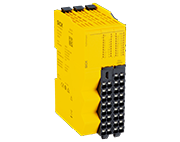
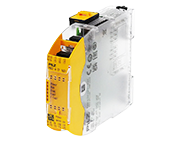
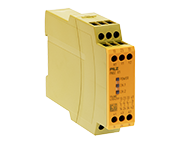
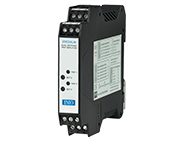
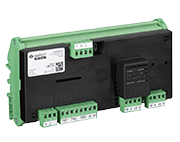
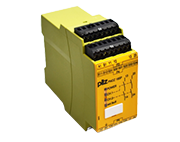
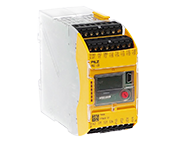
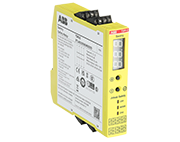
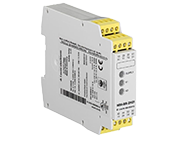
Safety relays are devices that implement safety functions. They function like any other relay, receiving one signal and sending out another.
Their primary concern is to monitor safety functions such as ETOP, safety gates, light barriers, light grids, two-way controls, pressure-sensitive mats, speed, standstill, and much more. They must always be designed so that, if wired correctly, neither a device fault nor an external fault caused by the sensor or actuator will result in the loss of the safety function.
Safety relays are distinguished by a variety of supply voltage ranges, the number of safety contacts, the number of terminals they have, and their method of actuation.
Types of Safety Relays
Safety relays are used to monitor safety devices and circuits and provide reliable safety outputs to support safe stopping and the prevention of unexpected starts. They are commonly used with devices such as E-stops, interlocks, and safeguarding sensors.
Safety relays are a specialized type of control relay used for safety circuits. For general-purpose control and switching components, browse Relays. For broader machine integration components such as PLCs and related control products, review Automation & Control.
- Safety relays used for monitoring common safety inputs and controlling safe outputs.
- Models selected based on input type, reset requirements, and output configuration.
- Devices chosen to match integration needs with machine controls and safeguarding systems.
For safeguarding device selection, compare Light Curtains, Safety Mats, and Safety Laser Scanner options.
Key Selection Criteria for Safety Relays
- Safety device inputs needed (E-stop, interlock, guarding sensor, etc.).
- Reset requirements (manual vs automatic) and expected workflow.
- Output configuration needed for the machine stop/control design.
- Power requirements and panel space constraints.
- Diagnostic/indicator needs for troubleshooting and verification.
Choosing a safety relay that matches input/output and reset requirements supports reliable safety monitoring and reduces integration rework.
Frequently Asked Questions
What do safety relays do in a safety circuit?
Safety relays monitor safety device inputs and provide safety-rated outputs to support safe stopping or prevention of unexpected start when unsafe conditions occur.
What should I compare when selecting a safety relay?
Compare required inputs, reset method, output configuration, power requirements, and whether diagnostics/indicators match your troubleshooting workflow.
When does the number of safety inputs/outputs matter most?
It matters most when multiple safety devices must be monitored or when the machine design requires multiple safety outputs. Match the relay configuration to the safety circuit design and expansion needs.
