
Semiconductors
Semiconductors—including transistors, diodes, LEDs, and power modules—enable high-speed switching, signal amplification, and efficient energy conversion. These components are fundamental to modern electronics, powering industrial automation, communication systems, and energy applications.
We can't find products matching the selection.
Shop By
Semiconductors for Power Control, Switching, and Electronic Circuit Protection
Semiconductors are discrete electronic components that use the properties of semiconductor materials to control, convert, switch, amplify, or regulate electrical power and signals. In industrial and commercial systems, semiconductor devices support applications ranging from power conversion and motor control to circuit protection, signal switching, rectification, lighting, and electronic control. Their fast switching capabilities, compact size, and high efficiency make them essential in modern electrical and automation equipment.
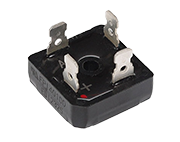
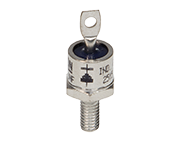
In practical applications, different semiconductor devices serve distinct functions within a circuit. Diodes control current flow in one direction and are commonly used for rectification, voltage protection, and signal control. Bridge rectifiers use several diodes arranged in a bridge circuit to convert AC power into DC power for drives, power supplies, battery chargers, and control equipment. Light-emitting diodes (LEDs) are highly efficient semiconductor light sources that offer high brightness, multiple wavelengths and colors, and fast switching rates for indication, lighting, and signaling applications.
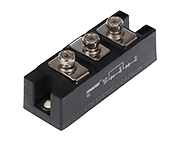
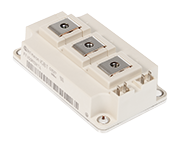
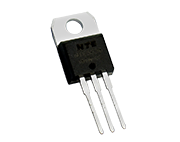
Transistors are among the most common semiconductor devices and are used to switch or amplify electrical signals and power. They are fundamental to modern electronics, supporting the speed, logic, efficiency, and power control required in a wide range of electronic components and systems. Power modules combine semiconductor devices such as IGBTs, MOSFETs, or diodes into compact assemblies for higher-power switching, signal amplification, and conversion applications.
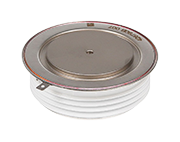
Additional semiconductor devices support controlled power regulation in AC circuits. SCRs provide controlled rectification and high-power switching by allowing current flow after a gate signal is applied, making them useful in power controllers, rectifiers, soft starters, and industrial heating systems. Triacs are commonly used for bidirectional AC switching in applications such as lighting control, heater control, and motor speed control.
When selecting semiconductor components, key considerations include voltage rating, current rating, switching speed, thermal performance, package style, and compatibility with the circuit design. Proper semiconductor selection helps improve circuit efficiency, reduce heat generation, protect sensitive components, and support reliable long-term operation. Whether used for rectification, amplification, controlled switching, lighting, or power conversion, semiconductor devices play a critical role in industrial electronics and power control systems.
Frequently Asked Questions
How do I know if a semiconductor is properly rated for my circuit?
The device should meet or exceed the circuit's voltage, current, power dissipation, and thermal requirements. It should also match the switching speed, package style, polarity, and control requirements of the application.
What does breakdown voltage mean in semiconductor selection?
Breakdown voltage is the maximum reverse or blocking voltage a semiconductor can withstand before it begins conducting unintentionally. The selected device should have a breakdown voltage rating above the maximum voltage expected in the circuit.
What protection components are commonly used with semiconductors?
Common protection components include fuses, MOVs, snubbers, transient voltage suppressors, gate resistors, heat sinks, and current-limiting devices. These help protect against overcurrent, voltage spikes, heat, and switching transients.